Simulation Tools Highlight Progressive System Variations Across Game Types When Bonuses Trigger in Digital Play
Felix Franke · Oct 11, 2026

Simulation Tools Highlight Progressive System Variations Across Game Types When Bonuses Trigger in Digital Play
Simulation software has become a central resource for examining how progressive wagering methods respond when digital games introduce bonus features, and researchers continue to track these patterns across multiple rule sets and payout structures. Data compiled through repeated modeling runs shows that systems built on doubling or incremental increases often encounter altered drawdown periods once bonus multipliers or free rounds activate, particularly in environments where house edges fluctuate between 0.5 and 2.8 percent depending on the variant selected. Observers note that October 2026 updates to several popular platforms incorporated new bonus layers that changed the frequency of streak resets, prompting fresh simulation batches to measure the resulting variance spikes.
Core Mechanics of Progressive Approaches in Variant Settings
Progressive strategies rely on adjusting stake sizes after wins or losses, and simulation engines isolate each variable while holding game rules constant across hundreds of thousands of cycles. In one set of trials focused on even-money bets, the same starting bankroll produced a 14 percent difference in session length when the underlying game switched from a single-deck format to a multi-deck version with altered doubling restrictions. Those running the models found that bonus triggers introduced temporary reductions in effective house edge, which in turn compressed the recovery windows required by systems that escalate wagers after each loss.
Impact of Bonus Activation on System Trajectories
Once bonus rounds begin, the distribution of outcomes shifts because multipliers and additional spins alter the probability of consecutive results. Simulations that inserted bonus events at fixed intervals revealed that certain progressive sequences experienced accelerated capital growth during the first three bonus cycles, followed by steeper declines if the bonus frequency dropped below modeled expectations. Figures released by the Nevada Gaming Control Board in its quarterly statistical summary confirm that bonus utilization rates in remote play rose steadily through mid-2026, providing external benchmarks against which simulation outputs could be validated.
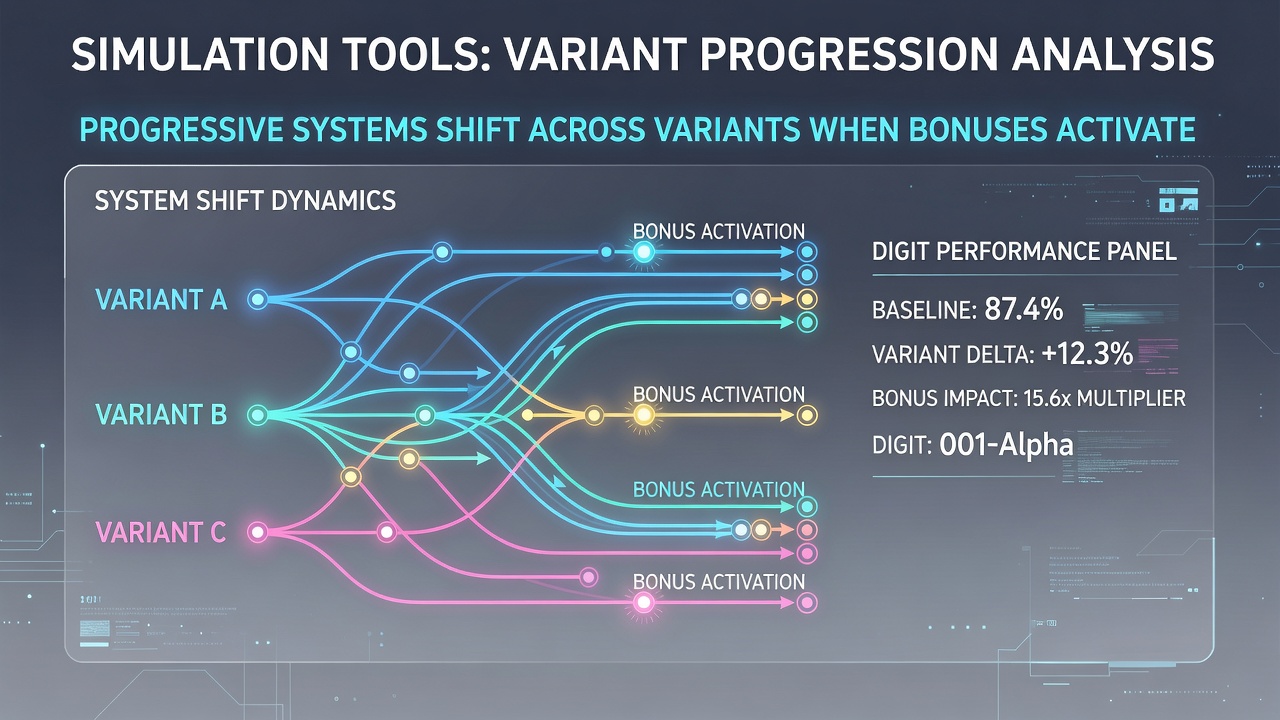
Engineers who built the testing environments added controls for volatility spikes that accompany bonus activation, and the resulting datasets showed clear divergence between flat-bet baselines and progressive curves. In variants where surrender options reduced the house edge by roughly 0.08 percent, progressive sequences required fewer doublings to reach target thresholds once bonuses contributed unexpected small wins. Conversely, games that limited bonus frequency extended the number of base-game rounds needed before any recovery pattern emerged, lengthening overall exposure time.
Comparative Results Across Multiple Rule Configurations
Side-by-side modeling of eight distinct rule sets produced measurable differences in maximum drawdown and time to recovery when the same progressive logic was applied. One configuration with early surrender and re-split aces generated a 9 percent lower peak exposure than a comparable setup lacking those features, even though both included identical bonus structures. Data from the Australian Gambling Research Centre indicates that player preference for variants with richer bonus menus has grown since 2025, supplying additional context for why simulation teams prioritize these specific rule combinations.
Further runs isolated the effect of bonus size versus frequency, holding total return-to-player constant. Larger but rarer bonuses tended to create pronounced sawtooth patterns in bankroll graphs, while smaller frequent bonuses smoothed the trajectory and reduced the number of times a progressive sequence hit its predefined ceiling. Researchers documented these patterns across 2.4 million simulated hands, confirming that the timing of bonus activation relative to wager escalation steps directly influenced whether a sequence completed within session limits or required extension into additional cycles.
Validation Against Regulatory and Industry Benchmarks
Independent testing labs have begun publishing summary statistics that align with simulation outputs, particularly around the interaction between progressive stake adjustments and bonus-driven return distributions. The National Indian Gaming Commission maintains public records of game performance metrics that researchers cross-reference when calibrating their models for different regulatory jurisdictions. These external datasets help confirm that the directional shifts observed in controlled environments mirror patterns recorded in live operation logs.
Conclusion
Simulation outputs continue to demonstrate that progressive systems do not behave uniformly once bonus mechanics enter the equation, and the magnitude of change depends on the precise combination of rules, bonus frequency, and volatility parameters present in each variant. Ongoing modeling work scheduled for late 2026 will incorporate fresh platform updates to refine these observations further, supplying additional reference points for analysts who track digital play dynamics across regions.